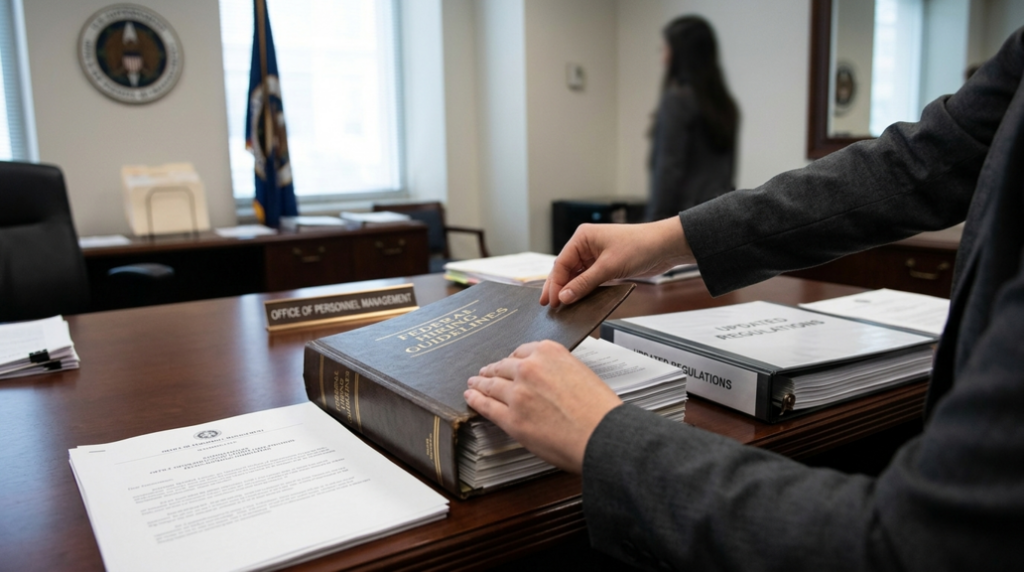
The Office of Personnel Management (OPM) has made a significant change by removing ‘disparate impact’ guidelines from federal hiring regulations. This move aligns with the Department of Justice’s recent assertion that addressing disparate impact in hiring assessments is unconstitutional. OPM stated that the changes resulting from its interim final rule are limited, indicating a shift in the approach to hiring practices within the federal government. The rescission of these guidelines follows a legal opinion from the DOJ in June 2026, which concluded that the Uniform Guidelines on Employee Selection Procedures’ (UGESP) disparate impact and validation framework is inconsistent.
The decision to remove ‘disparate impact’ guidelines from federal hiring regulations has sparked debate and raised concerns about potential implications for diversity and inclusion in the federal workforce. Critics argue that eliminating these guidelines could lead to discriminatory hiring practices and hinder efforts to promote equal opportunities for all individuals. On the other hand, supporters of the move claim that it will allow for a more merit-based approach to hiring, focusing on qualifications and skills rather than demographic factors.
The significance of OPM’s decision lies in its potential impact on the federal government’s hiring practices and workforce composition. By removing ‘disparate impact’ guidelines, the OPM is signaling a shift towards a different approach to addressing diversity and inclusion in federal hiring. This change could have far-reaching consequences for how federal agencies recruit and select employees, as well as the overall makeup of the federal workforce.
It remains to be seen how this development will play out in practice and what the long-term effects will be on federal hiring practices. The decision to remove ‘disparate impact’ guidelines could lead to changes in recruitment strategies, evaluation processes, and diversity initiatives within federal agencies. Moving forward, it will be important to monitor how these changes impact the composition of the federal workforce and whether they achieve the intended goals of promoting fairness and equal opportunity in federal hiring practices.