A federal court has issued a significant ruling blocking the United States Postal Service (USPS) from implementing an executive order that sought to impose new restrictions on mail voting ahead of the 2026 midterm elections. The decision, handed down by Judge Indira Talwani, prevents the USPS from enacting changes that critics argue would have complicated the mail-in voting process, potentially affecting voter access and election administration nationwide.
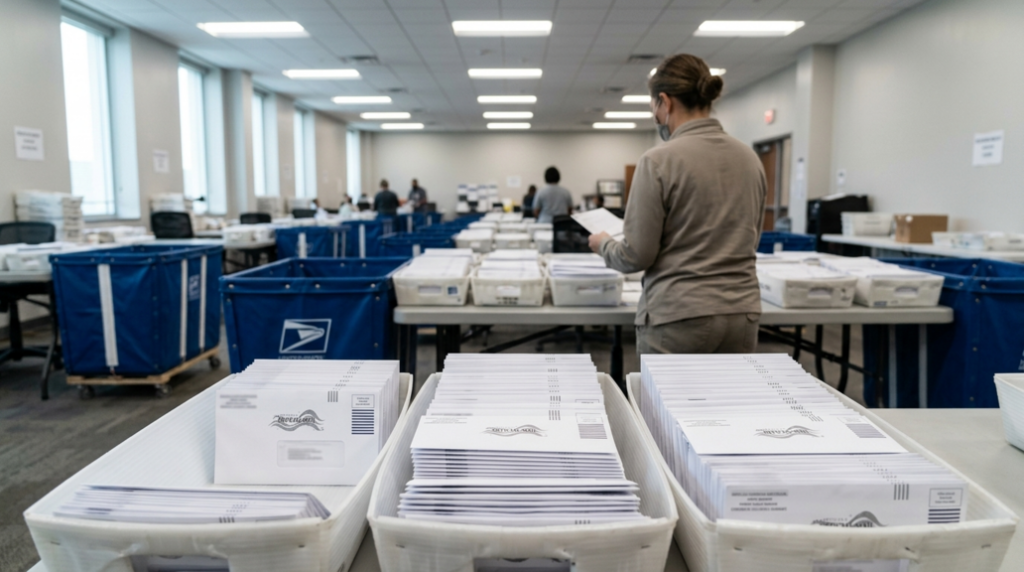
The executive order in question was issued by the Trump administration earlier in 2026 and directed the USPS to adopt regulations aimed at tightening controls over mail voting. Among other provisions, the order mandated redesigns of mail ballots and imposed stricter handling and delivery protocols. Proponents of the order argued these measures were necessary to safeguard election integrity and prevent fraud. However, opponents contended that the restrictions would disproportionately hinder voters who rely on mail ballots, including seniors, disabled individuals, and those in rural areas.
Judge Talwani’s ruling explicitly prohibits the USPS from moving forward with these changes, citing concerns that the executive order conflicts with federal election laws and could undermine the fundamental right to vote. The court found that the order’s restrictions on mail voting were likely to cause irreparable harm to voters and election officials by disrupting established voting procedures and creating confusion during a critical election cycle.
This legal intervention comes amid heightened national debates over election security and voting access. The USPS plays a crucial role in the administration of mail-in ballots, which have become increasingly popular and essential, especially following the COVID-19 pandemic. Federal election law requires certain standards for the handling and preservation of election materials, but the executive order’s directives went beyond these established norms, prompting legal challenges from voting rights organizations and civil liberties groups.
The League of Women Voters and the American Civil Liberties Union (ACLU) were among the prominent plaintiffs opposing the executive order. Susan Dzieduszycka-Suinat, President and CEO of the U.S. Vote Foundation, expressed relief at the court’s decision, emphasizing the importance of maintaining accessible and reliable mail voting options. The ACLU highlighted that the ruling protects voters from unnecessary barriers and preserves the USPS’s ability to facilitate timely ballot delivery.
The Trump administration has responded by appealing the ruling, arguing that the USPS is running out of time to implement the changes before the midterms. Government attorneys assert that the executive order is a lawful exercise of presidential authority intended to enhance election security. They contend that the USPS must have the flexibility to adapt mail voting procedures to address emerging threats and ensure the integrity of the electoral process.
The legal battle now shifts to appellate courts, where the government seeks to overturn Judge Talwani’s injunction. Meanwhile, election officials and voting rights advocates are closely monitoring the situation, concerned about the potential impact of any disruptions to mail voting infrastructure. The outcome of this case will have far-reaching implications for how mail ballots are handled in future elections and could set precedent regarding the limits of executive power over election administration.
Institutionally, this ruling underscores the judiciary’s role in balancing executive actions with statutory protections for voting rights. It highlights the tension between efforts to reform election procedures and the imperative to preserve voter access. Politically, the case reflects ongoing disputes over mail voting, which remains a contentious issue in American electoral politics, with debates often split along partisan lines.
As the appeal process unfolds, stakeholders anticipate further judicial scrutiny of the executive order’s legality and its practical effects on election administration. The case serves as a critical example of how courts can intervene to check executive directives that intersect with fundamental democratic processes. Ultimately, the resolution will shape the operational landscape for mail voting and influence public confidence in the electoral system ahead of the 2026 midterms and beyond.