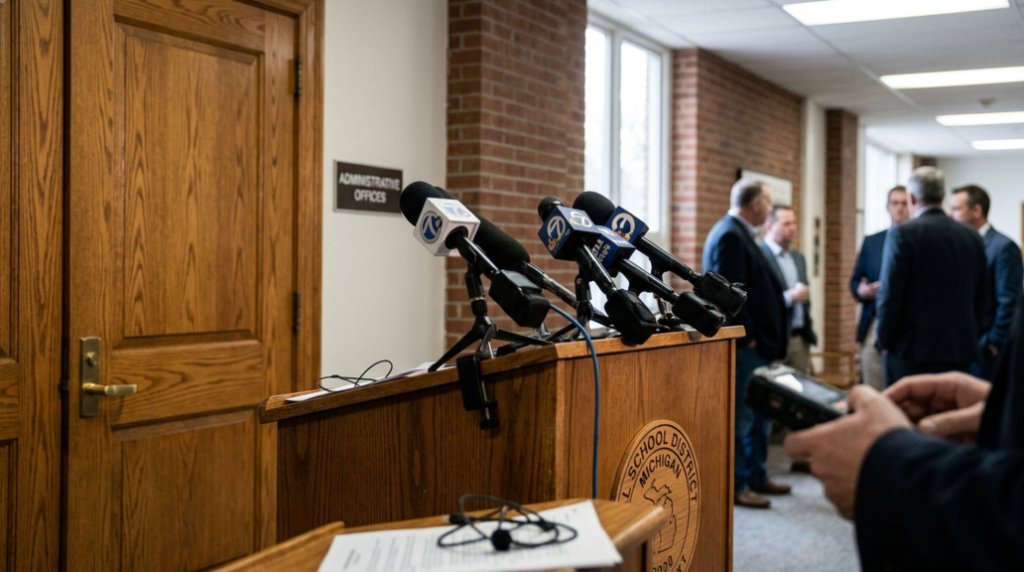
A Michigan school district’s transgender policies are currently under judicial review following a First Amendment challenge, raising significant questions about the intersection of free speech rights and school regulatory authority. The case, reported by the National Catholic Register, involves a legal dispute over the school’s policies concerning transgender students and the extent to which these policies may restrict or regulate speech within the educational environment.
The challenge centers on whether the school’s transgender policies infringe upon the First Amendment rights of students, staff, or others by limiting expression related to gender identity. While the specific details of the policies and the nature of the speech restrictions have not been fully disclosed in the public reporting, the court’s reconsideration signals an ongoing debate about how schools balance inclusivity and nondiscrimination with constitutional protections for free speech.
This legal development is emblematic of broader national tensions concerning the rights of transgender individuals in educational settings and the scope of permissible speech. Schools across the United States have increasingly adopted policies to support transgender students, including guidelines on bathroom access, pronoun usage, and participation in gender-segregated activities. However, these policies sometimes prompt legal challenges from individuals or groups who argue that such rules may suppress dissenting viewpoints or compel speech in violation of the First Amendment.
The First Amendment protects individuals from government restrictions on speech, including in public schools, but this right is not absolute. Courts have long recognized that schools may impose certain limitations on speech to maintain order and protect the rights of all students. The key legal question in this Michigan case is whether the transgender policies represent a permissible regulation of conduct and speech or an unconstitutional restriction on free expression.
The school district, as the defendant, likely argues that its policies are designed to create a safe and inclusive environment for all students, including transgender youth, and that these policies do not unlawfully restrict speech but rather set reasonable boundaries consistent with educational objectives. On the other hand, the plaintiffs contend that the policies infringe on their constitutional rights by restricting speech related to gender identity or by compelling speech that conflicts with their beliefs.
This dispute highlights the complex role of institutional power in shaping public debate within schools. Educational institutions wield regulatory authority to enforce policies that reflect evolving social norms and legal standards, yet they must also respect constitutional protections. The court’s reconsideration of the challenge underscores the ongoing judicial effort to delineate the limits of school authority in regulating speech, especially in contexts involving sensitive and contested social issues.
The outcome of this case could have significant implications for journalism, media, and public discourse. Schools often serve as microcosms for broader societal debates about free speech and inclusion. Judicial rulings that clarify the boundaries of permissible speech regulations in schools may influence how media organizations report on similar controversies and how public debate unfolds around transgender rights and educational policies.
Moreover, the case may affect access to information and participation in public debate by shaping the extent to which individuals can express dissenting views in educational settings without facing institutional sanctions. This is particularly relevant given the heightened national attention on transgender rights and the proliferation of legal challenges to policies perceived as either protective or restrictive.
The legal context for this dispute is informed by prior cases and scholarship on free speech in schools. For example, courts have historically balanced students’ speech rights against schools’ interests in preventing disruption and protecting vulnerable populations. Recent scholarship, such as analyses of “educational gag orders” and challenges to book bans, illustrates the ongoing judicial scrutiny of policies that may limit ideological expression in schools. These precedents provide a framework for understanding the Michigan case’s significance.
Looking ahead, the court’s ruling on this First Amendment challenge will be closely watched by educators, legal experts, and advocacy groups on all sides of the debate. A decision affirming the school’s policies could reinforce the authority of educational institutions to regulate speech in pursuit of inclusivity and nondiscrimination. Conversely, a ruling favoring the plaintiffs might impose new constraints on how schools craft and enforce policies related to gender identity and expression.
In either scenario, the case exemplifies the dynamic tension between institutional power and individual rights in the realm of public education. It also reflects the broader societal challenge of accommodating diverse perspectives while protecting the dignity and rights of marginalized groups. As the court continues to reconsider this challenge, the outcome will contribute to the evolving legal landscape governing free speech and transgender rights in schools, with potential ripple effects for media coverage and public discourse nationwide.