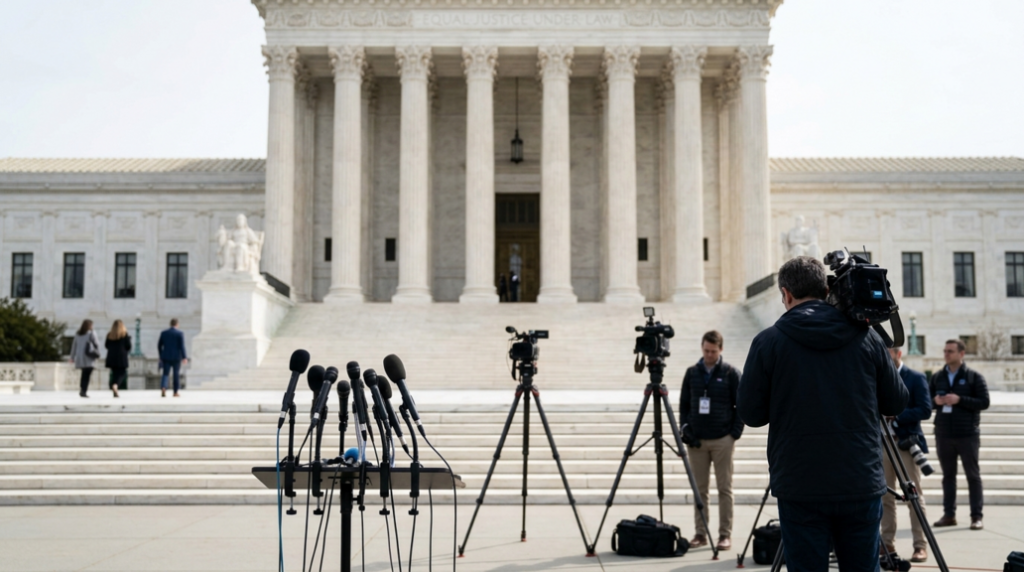
The Supreme Court of the United States has recently demonstrated a notable degree of unanimity in its rulings on First Amendment issues, signaling a rare moment of consensus on matters central to free speech and expression. According to a report from the National Conference of State Legislatures (NCSL), the Court’s recent decisions reflect a nearly unified stance on the interpretation and application of First Amendment protections. This development is significant for media organizations, journalists, and the broader public debate, as it clarifies and reinforces constitutional boundaries that govern speech and expression in the United States.
The First Amendment, a cornerstone of American democracy, prohibits Congress from making laws that abridge the freedom of speech, the press, or the right of the people to assemble peacefully. This constitutional guarantee underpins much of the nation’s legal framework for protecting expression and access to information. The NCSL’s observation of the Court’s recent rulings highlights how the judiciary continues to play a pivotal role in defining the scope and limits of these freedoms, particularly in an era marked by complex challenges such as digital communication, political polarization, and evolving social norms.
While the report does not specify individual cases, the context of recent jurisprudence suggests that the Court has addressed a range of issues involving symbolic speech, government regulation of expression, and the boundaries of permissible content moderation. For example, landmark precedents such as Texas v. Johnson, which affirmed flag burning as protected symbolic speech, illustrate the Court’s longstanding commitment to safeguarding expressive conduct under the First Amendment. The current wave of rulings appears to reaffirm these principles, emphasizing that government restrictions on speech must meet stringent constitutional scrutiny.
The legal significance of the Court’s near-unanimous decisions lies in their potential to set clear precedents that lower courts and government bodies must follow. This clarity is crucial for media entities and journalists who operate within a legal environment that can be uncertain or contested. By reinforcing the protections afforded to speech, these rulings help ensure that publishers and broadcasters can engage in robust public debate without undue fear of censorship or legal reprisal. Moreover, they provide guidance on how government agencies may regulate speech without infringing constitutional rights.
From a regulatory perspective, the Court’s stance may influence ongoing debates about content moderation on social media platforms and the role of government in overseeing online speech. As platforms grapple with balancing free expression against concerns about misinformation and harmful content, judicial interpretations of the First Amendment serve as a critical reference point. The NCSL’s report underscores the importance of these rulings in shaping policies that affect not only traditional media but also digital communication channels that have become central to public discourse.
Institutionally, the Supreme Court’s unified approach may also impact access to government information and transparency. The First Amendment’s protections extend to the press’s ability to gather and disseminate information, which is essential for informed citizen participation in democracy. By upholding strong free speech rights, the Court supports the media’s watchdog role and helps maintain an open marketplace of ideas. This is particularly relevant in light of recent large-scale peaceful protests, such as the “No Kings” gatherings, which rely on First Amendment freedoms to organize and express dissent.
Looking ahead, the implications of the Court’s recent rulings could influence future litigation and legislative efforts concerning speech and expression. As new challenges arise—ranging from government attempts to regulate political speech to disputes over journalist source protection—the precedents established by these decisions will serve as foundational legal standards. The near unanimity also suggests a judicial willingness to protect speech robustly, which may deter overly broad or vague government restrictions that could chill public debate.
In sum, the Supreme Court’s recent First Amendment rulings, as highlighted by the National Conference of State Legislatures, represent a significant moment of judicial consensus that reinforces the constitutional protections vital to media freedom and public discourse. This development matters not only for the immediate parties involved in these cases but also for the broader ecosystem of journalism, expression, and democratic participation. By clarifying the boundaries of permissible government action regarding speech, the Court helps preserve the essential freedoms that enable a vibrant and open society.