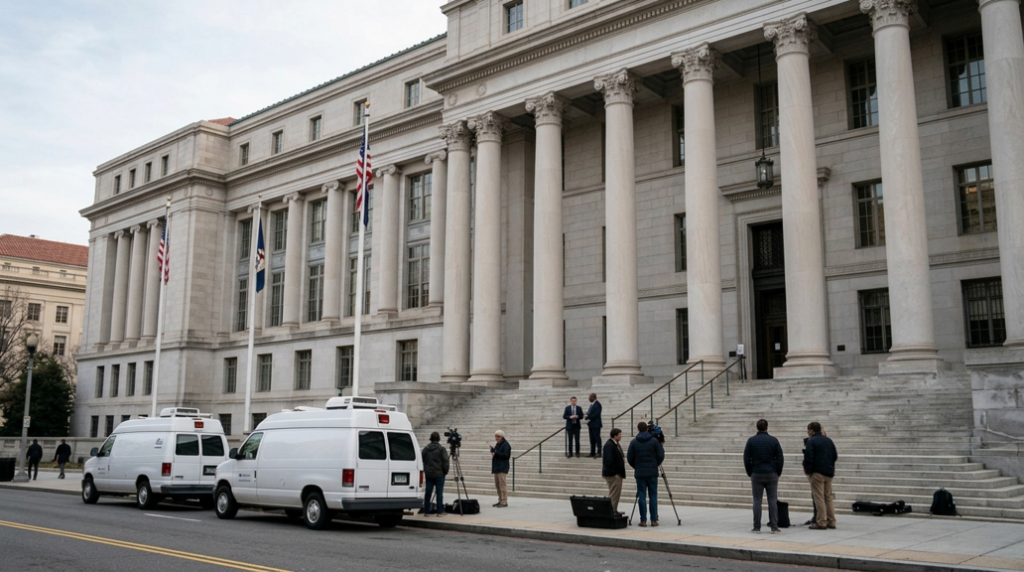
The United States Court of Appeals for the Eighth Circuit has recently issued a significant ruling overturning a South Dakota law that imposed a nine-month deadline for submitting petitions for ballot initiatives. This decision marks a pivotal moment in the ongoing legal debate over the regulation of direct democracy mechanisms and the balance between state procedural rules and constitutional protections for political speech.
The case arose from South Dakota’s statutory requirement that petitioners seeking to place initiatives on the ballot must submit their petitions within nine months. This deadline was challenged on constitutional grounds, with opponents arguing that it infringed upon free speech and the right to political participation guaranteed under the First Amendment. The Eighth Circuit’s ruling sided with the challengers, agreeing with a lower court’s determination that the nine-month deadline was unconstitutional.
At the heart of the legal dispute is the question of how states can regulate the initiative petition process without unduly restricting political expression. Ballot initiatives are a form of direct democracy that allows citizens to propose and vote on laws independently of the legislature. Courts have historically recognized that the circulation of petitions is a form of political speech and association, warranting robust First Amendment protections. However, states also have an interest in setting reasonable deadlines to ensure orderly elections and prevent confusion.
South Dakota’s nine-month deadline was intended to provide a clear timeframe for petition circulation and verification before elections. Yet, the challengers contended that this restriction was overly burdensome, limiting the time available for grassroots organizing and public debate on proposed measures. The Eighth Circuit agreed, finding that the deadline imposed a substantial burden on political speech without sufficient justification.
This ruling has immediate implications for South Dakota’s electoral processes and could influence similar laws in other states. By striking down the nine-month deadline, the court has effectively expanded the window for citizens to engage in the initiative process, potentially increasing access to the ballot and enhancing democratic participation. The decision underscores the judiciary’s role in scrutinizing state regulations that affect political speech and the mechanisms of direct democracy.
Legal experts note that the ruling reflects a broader tension between state regulatory authority and constitutional protections for political expression. While states must maintain orderly elections, courts have increasingly emphasized that procedural rules cannot be so restrictive as to chill political advocacy. The Eighth Circuit’s decision aligns with this trend, reinforcing the principle that access to the initiative process is a fundamental component of public debate and political participation.
The case also highlights the evolving landscape of ballot initiative laws, where states have adopted varying approaches to deadlines and procedural requirements. Some states impose shorter deadlines, while others allow more extended periods for petition circulation. The South Dakota ruling may prompt legislative reconsideration of such deadlines, balancing administrative concerns with constitutional rights.
Looking ahead, the state of South Dakota may seek to appeal the Eighth Circuit’s decision to the Supreme Court, potentially setting the stage for a landmark ruling on the permissible scope of state regulation over ballot initiatives. Meanwhile, advocacy groups and political organizers are likely to view the ruling as a victory for free speech and democratic engagement, providing greater flexibility in mobilizing support for ballot measures.
Beyond South Dakota, the decision could serve as persuasive precedent for challenges to similar petition deadlines in other jurisdictions within the Eighth Circuit’s jurisdiction and possibly beyond. It reinforces the judiciary’s willingness to invalidate state laws that impose undue burdens on political speech, particularly in the context of direct democracy.
In sum, the Eighth Circuit’s ruling against South Dakota’s nine-month petition deadline represents a significant development in the intersection of election law, constitutional rights, and public debate. By affirming that procedural deadlines must not infringe on fundamental political expression, the court has contributed to shaping the legal framework that governs how citizens participate in shaping their laws and policies through ballot initiatives. This decision will likely influence future legal challenges, legislative reforms, and the broader discourse on the role of direct democracy in American governance.