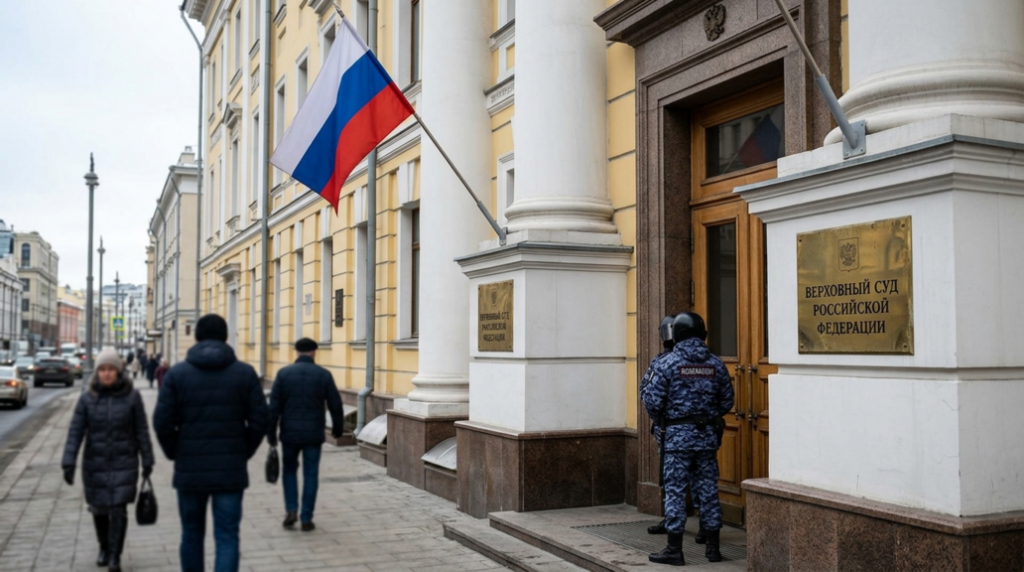
Russia’s Supreme Court has officially barred the Yabloko party, the country’s only registered political party openly opposing the war in Ukraine, from participating in the upcoming parliamentary elections scheduled for September. This judicial decision, announced on August 10, represents a significant development in Russia’s political landscape, effectively removing a critical voice of dissent from the electoral process. The court’s ruling came after a lawsuit was filed by nationalist groups seeking to exclude Yabloko on the grounds of its anti-war stance, which they characterized as undermining Russia’s national interests.
The legal action against Yabloko was initiated by Russian nationalist organizations that accused the party of promoting views contrary to the state’s official position on the conflict in Ukraine. The Supreme Court’s decision to uphold the ban reflects the judiciary’s alignment with the government’s broader efforts to consolidate political control and limit opposition voices ahead of the parliamentary elections. By disqualifying Yabloko, the court has effectively eliminated the only party that has publicly opposed the war, raising concerns about the fairness and inclusiveness of the electoral process.
At the heart of this legal dispute is the question of political expression and the limits of permissible dissent within Russia’s electoral framework. Yabloko’s platform, which includes calls for peace and an end to hostilities, directly challenges the Kremlin’s narrative and military policies. The court’s ruling underscores the state’s intolerance for political parties that deviate from sanctioned viewpoints, particularly on issues deemed sensitive to national security and foreign policy. This case illustrates how legal mechanisms are employed to enforce political conformity and restrict opposition participation in elections.
Yabloko, founded in the early 1990s, has long been recognized as a liberal opposition party advocating for democratic reforms, human rights, and rule of law. Its anti-war position has distinguished it from other political entities in Russia, many of which either support the government’s actions or avoid taking a clear stance. The party’s exclusion from the ballot not only diminishes political pluralism but also signals a tightening of the political space for dissent ahead of a critical electoral contest that will shape Russia’s legislative agenda.
The Supreme Court’s decision has drawn attention from international observers and human rights organizations, which view the ban as part of a broader pattern of suppressing political opposition in Russia. Critics argue that the removal of Yabloko undermines the legitimacy of the elections by denying voters access to alternative viewpoints and restricting democratic choice. Supporters of the ruling, however, contend that parties opposing the war threaten national unity and security, justifying legal actions to exclude them from the political process.
Institutionally, this development highlights the role of Russia’s judiciary as an instrument of state policy rather than an independent arbiter. The Supreme Court’s willingness to disqualify a legally registered party based on its political platform raises questions about the separation of powers and the protection of political rights under Russian law. It also reflects the broader environment in which electoral competition is heavily managed, with the state exercising significant influence over which parties can participate and under what conditions.
Looking ahead, the barring of Yabloko from the parliamentary elections is likely to have significant political ramifications. Without an official anti-war party on the ballot, the electoral contest may see reduced debate on Russia’s military engagement and fewer opportunities for voters to express dissent through formal channels. This could further consolidate the ruling party’s dominance in the legislature and limit prospects for political reform. Additionally, the decision may provoke increased criticism from international actors concerned about the erosion of democratic norms in Russia.
In summary, the Supreme Court’s removal of the Yabloko party from the upcoming parliamentary elections marks a critical juncture in Russia’s political and legal landscape. It exemplifies how judicial authority is leveraged to enforce political conformity and curtail opposition, particularly on issues of war and peace. The case underscores the challenges facing political pluralism and democratic participation in Russia, raising important questions about the future of electoral competition and the rule of law in the country.