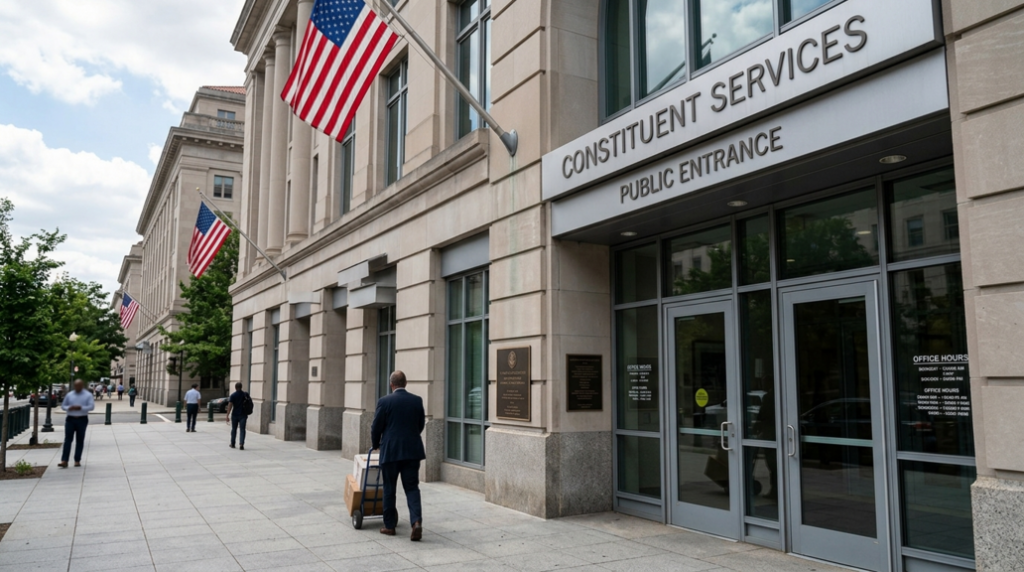
In a response to the impact of federal workforce firings on constituent services, a proposed bill, H.R. 10036 (IH) – Federal Workforce Firings Act, has been introduced in the 119th Congress. The bill aims to address the challenges faced by constituents when federal employees are terminated, potentially leading to a disruption in services provided by the government. Specifically, the bill would require the Government Accountability Office (GAO) to assess the effects of workforce reductions on constituent services and report its findings to Congress.
This legislative response highlights the growing concern over the consequences of workforce terminations within the federal government. Constituent services are vital for ensuring that citizens receive the support and assistance they need from government agencies. By focusing on the impact of firings on these services, the bill underscores the importance of maintaining a functioning and efficient government workforce to serve the needs of the public.
The introduction of H.R. 10036 reflects a recognition of the potential repercussions of workforce reductions on the ability of government agencies to fulfill their obligations to constituents. It also signals a proactive effort to address the challenges that arise from such actions, highlighting the role of legislative oversight in safeguarding the interests of the public. The bill underscores the need for accountability and transparency in government decision-making related to workforce management.
Moving forward, the fate of H.R. 10036 will depend on the support it garners from lawmakers and stakeholders. If the bill progresses through the legislative process, it could lead to a more comprehensive understanding of the impact of federal workforce firings on constituent services and pave the way for potential reforms to mitigate any negative consequences. Ultimately, the passage of this bill could have significant implications for how the government manages its workforce and ensures the effective delivery of services to the American public.